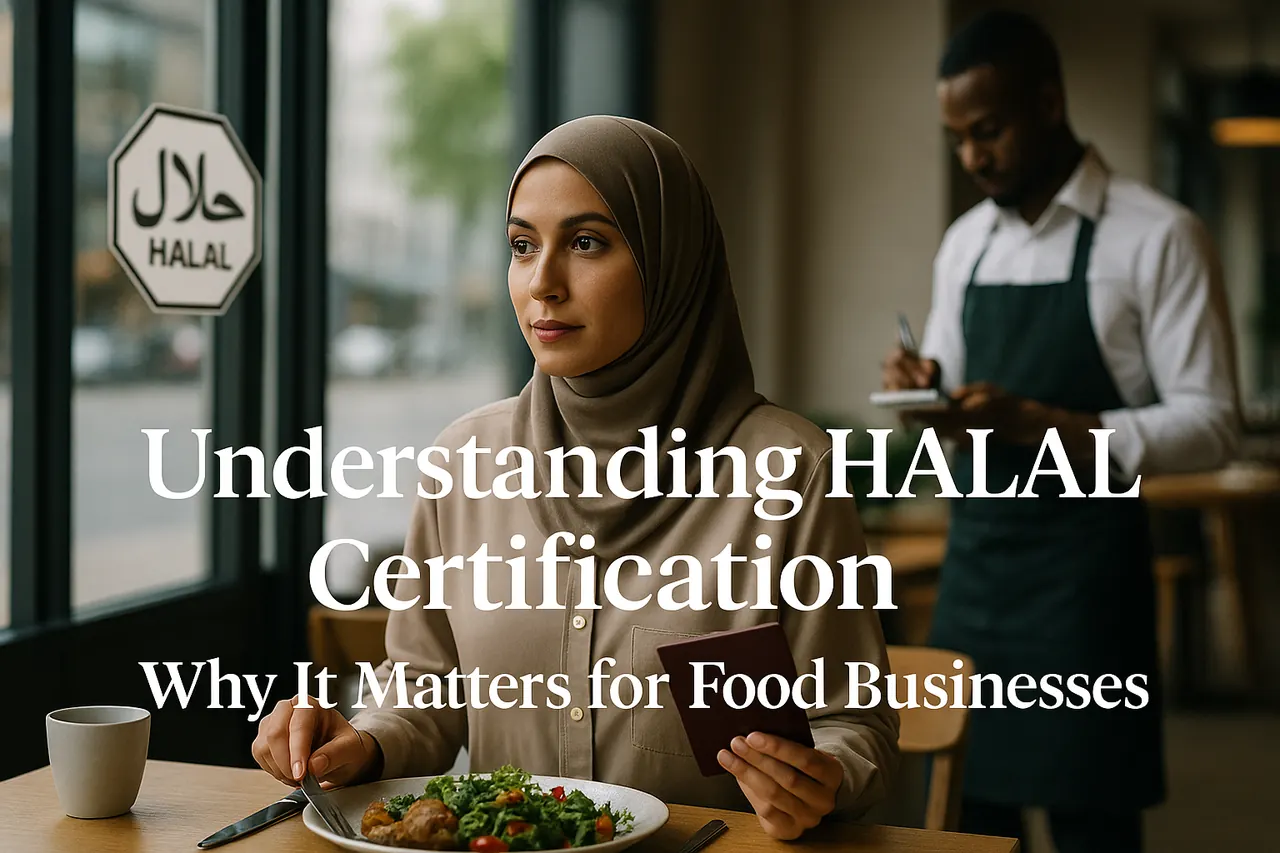
Understanding HALAL Certification Why It Matters for Food Businesses
Understanding HALAL certification: why is it important starts with one practical point: for food businesses, halal certification can matter as formal proof of halal status, a basis for customer confidence, and in some markets a route to legal compliance. BPJPH states that halal status is proven by a halal certificate rather than by informal claims or religious attributes, and it also links certification with consumer protection, business competitiveness, and market development.
For a food business, the key question is not simply whether halal sounds relevant. It is whether your products, customers, and target markets expect verified halal status. If they do, certification becomes an operational and commercial issue, not just a marketing label.
When HALAL certification is most relevant
HALAL certification matters most when a business sells products into channels where halal status is expected or required. A clear official example comes from Indonesia. BPJPH says that from 18 October 2026, mandatory halal requirements apply across a wider set of covered product categories, including food and drink, slaughter products and slaughter services, certain ingredients for food and drink, cosmetics, some chemical and genetically engineered products, supplements, and some consumer goods. See the BPJPH notice on product categories covered from 18 October 2026.
That makes certification especially relevant for businesses that:
- sell food or ingredients into halal-sensitive markets
- plan to enter markets where halal certification is part of the legal framework
- make halal claims to consumers or trade buyers
- supply importers, distributors, retailers, or foodservice buyers that expect formal proof
Even where certification is not legally required in every market, it can still matter when buyers want independent evidence rather than a self-declared claim.
What HALAL certification means in practice
BPJPH describes halal assurance as legal certainty regarding a product's halal status, evidenced by a certificate. It also says halal must be considered comprehensively, from materials and production through to presentation to consumers. In its guidance on post-certification obligations, BPJPH explains that businesses with certified products must maintain halal integrity consistently and apply a halal assurance system over time. You can read that in BPJPH guidance on ongoing halal product assurance obligations.
For food businesses, that means halal certification is tied to how the product is controlled as a business process, not just to a single statement on packaging or in advertising.
What a food business should expect to be evaluated
The supplied evidence supports a careful, narrower explanation here. BPJPH states that halal status is determined through a formal examination and decision process, and that halal must be met across the product, materials, production process, and presentation. See BPJPH on halal status being proven by certificate rather than claim.
BPJPH also states that, after certification, businesses are required to maintain halal status, separate halal and non-halal activities in specified contexts, update certification if materials or process change, and report relevant changes. That makes the following areas especially important to review before applying:
- the product and the materials used
- how production is carried out
- whether halal and non-halal activities, places, or tools are separated where required
- whether the business can maintain the required halal assurance practices consistently
This is a more accurate way to understand the review than treating halal as a simple ingredient-only check.
Why certification can affect trust and market access
HALAL certification can influence more than religious positioning. BPJPH describes certification as an instrument of consumer protection and also as part of a strategy to strengthen business competitiveness and support economic growth. See BPJPH on halal certification, competitiveness, and economic value.
For a food business, that matters in three ways:
- Customer trust: a certificate gives buyers and consumers a formal basis for believing the product has passed an approved process.
- Market access: where a market or buyer expects halal proof, certification can be part of getting products accepted.
- Commercial positioning: certification may help a business serve customer groups that expect documented halal compliance rather than informal assurances.
The exact commercial outcome will vary by market and buyer, but the supplied official evidence clearly supports the link between certification, consumer protection, and business competitiveness.
Risks of operating without appropriate certification
If customers or buyers expect halal certification, operating without it can create both trust and compliance problems. BPJPH says halal status is proven by certification, not by claims such as verbal assurances or informal wording. It also warns that inaccurate information about halal status can mislead consumers and damage public trust. See BPJPH on the risks of unsupported halal claims.
For businesses selling in the UK, the Food Standards Agency states that if a business says food is halal, it must genuinely be halal, and falsely labelling food as halal is illegal. That appears in the FSA's Questions to the Board page addressing halal mislabelling.
In practical terms, the risks can include:
- misleading customers if the halal claim is not properly supported
- loss of trust where buyers expect formal verification
- difficulty selling into markets with mandatory halal rules for covered products
- administrative sanctions in jurisdictions that apply mandatory halal requirements to the relevant products
What to evaluate before starting the process
Before deciding whether HALAL certification is needed or worthwhile, a food business should review the points that the supplied evidence supports most clearly.
| What to evaluate | Why it matters |
|---|---|
| Target market | Requirements differ by market. BPJPH provides a clear example of a market where halal certification can be mandatory for covered products. |
| Product category | Covered categories may include not only food and drink but also related ingredients and other product types in the relevant framework. |
| Materials used | BPJPH links halal status to the product comprehensively, including materials and production. |
| Production process | The process matters because certification is based on formal examination and not on a simple claim. |
| Separation of halal and non-halal activities | BPJPH states separation is required in specified contexts for certified operations. |
| Ability to maintain ongoing controls | BPJPH says businesses with certified products must continue applying halal assurance consistently. |
For micro and small businesses considering Indonesia's self-declare route, BPJPH also lists specific criteria such as having a micro or small business registration, using materials already assured as halal, running a simple production process, keeping halal and non-halal processes separate, and preparing the required documents. See the BPJPH criteria for UMK applicants under the SEHATI 2026 program.
A simple decision path for food businesses
If you are unsure whether halal certification is worth pursuing, this sequence is a practical starting point:
- Check your market. Are you selling into a market or channel that expects formal halal proof?
- Check your product type. Does your product fall within a category that may be covered by halal requirements in that market?
- Check your process readiness. Can you explain your materials and how the product is made in a way that fits a formal review?
- Check operational separation. If halal and non-halal activities coexist, can they be separated where required?
- Check your route. If Indonesia is relevant, BPJPH's official halal certification service page is the starting point for understanding the available certification channels.
Worked example using the supplied evidence
Illustrative example: A food business wants to enter a market where buyers expect halal-certified products and is reviewing whether formal certification is necessary. The first step is to confirm whether the target market applies mandatory halal rules to that product category. If Indonesia is one of the destinations, BPJPH's published category guidance and certification pages become especially relevant. Next, the business should review its materials, production setup, and whether halal and non-halal activities are separated where required. If it is a small business considering an Indonesian route, it should compare its situation with the UMK criteria published by BPJPH, including process simplicity, material assurance, and document readiness.
This kind of review helps a business decide whether certification is likely to be necessary now, required for a specific market entry plan, or worth preparing for before approaching buyers.
FAQ
Is HALAL certification only relevant for meat businesses?
No. The supplied BPJPH evidence shows that halal requirements can apply more broadly than finished meat products. The categories mentioned for 18 October 2026 include food and drink, slaughter-related products and services, ingredients for food and drink, and several other product groups. See the BPJPH category summary for mandatory halal coverage.
Can a business rely on wording such as no pork instead of certification?
Not where formal certification is the required proof. BPJPH states that halal status is proven by a halal certificate and not by verbal or written claims alone. See BPJPH on certification as the valid proof of halal status.
Why does HALAL certification matter commercially if my business already has customers?
Because some buyers and markets want formal proof, not just reassurance. BPJPH links halal certification with consumer protection, greater trust, competitiveness, and market development. See BPJPH on the commercial and market role of certification.
What is a sensible first step if I am still unsure?
Start by mapping your products, target market, and production setup against the published requirements of the relevant authority. If Indonesia is relevant, review the BPJPH halal certification service page and, if you are a small business, the BPJPH UMK criteria page.
Next step
If you are deciding whether halal certification is relevant to your food business, make one list covering your product categories, the markets you want to sell into, and whether your production setup can support formal halal review. Then compare that list with the published requirements of the authority or market that matters most to your sales plan.
Contact Us
Contact our team using the details below.